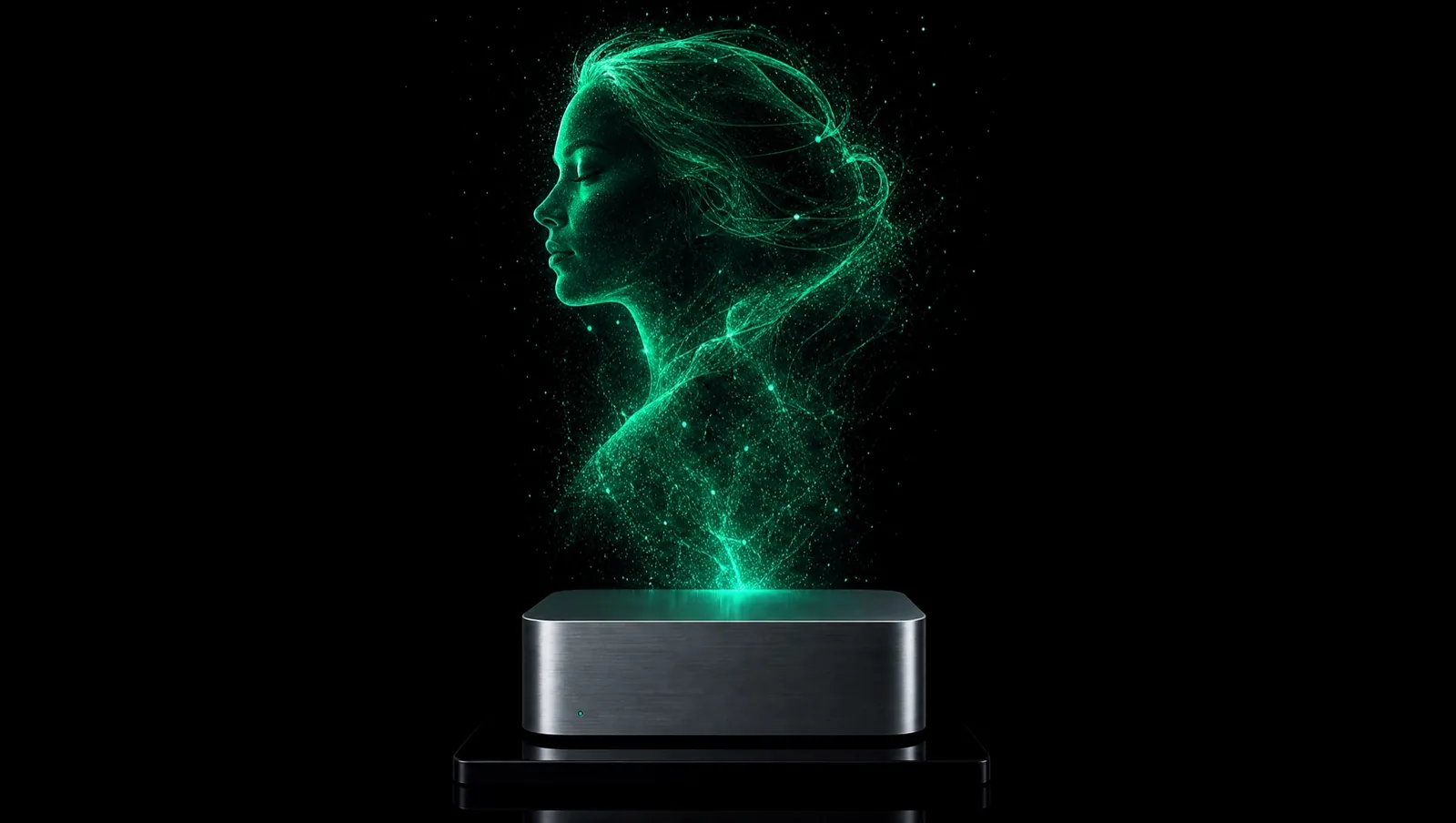
how an ai in a box got a face, a site and a voice
it started with a channel about entrepreneurs.
in Ukraine we ran a project that told the stories of entrepreneurs — how they built their businesses: The Business Code. Vitaly is into business, he watched the videos — and that is how we met. a conversation turned into a first, small project: the marketing for his parenting bot ADHD Parents AI, with the mascot Iggy. and from there it grew into a partnership in KORA. his side: product, hardware, delivery. my side: the whole marketing — packaging, website, content, film.
not a chatbot — a company ai with a home that belongs to the company
before there was a website, KORA needed a sentence nobody would mistake for a chatbot. the category: a private company ai that lives on a device of its own — the Core, a small box in the office — and does the work that comes back every week: following up on quotes, chasing invoices, appointments, documents. you talk to her like to a person; but speech is the way in, not the category. and she isn't a new system you have to move into: she works through what the company already uses.
for whom: owner-run companies with one to thirty people in Canada and the US — bookkeepers, contractors, insurance brokers, property managers, small law firms, clinics. the best customer already has a running business, clients, software — and too much that only goes across his desk. not for corporations with a procurement department and six months of rollout. and not for someone who only wants a chatbot on the website or wants to “play with ai for a bit”.
against what: not against the big platforms. the real competitor is the free ai that's already open in the customer's next tab — it won the question “should we try ai?” long ago. so KORA doesn't come in with “try ai”, but with what comes after: the cloud reads your business anew with every question and earns when you use more. KORA learns it once and earns when you stay. they optimize what they sell. KORA optimizes what you spend. that was the pivot in september: away from privacy as the first argument, towards the reverse economics. privacy gets you into the conversation — it's not the reason to buy.
the promise is deliberately small: KORA checks before she promises. nothing goes out without the owner's yes — no email, no payment, no publication. no “ai that never lies”, no percentage of savings, no full autonomy. only that she checks before she commits. the sentence an owner should say in the end: “give me a moment. I'll ask KORA.”
✗ chatbot · ✗ “ai that never lies” · ✗ full autonomy · ✗ enterprise with a procurement department
✓ a device of her own that the company owns · ✓ checks before she promises · ✓ nothing goes out without a yes · ✓ 1–30 people, Canada and the US
measure first, then claim
before a single sentence went on the website, i measured the market: 157 reddit threads with 2,249 comments and 174,323 words, 98 search terms in the US and Canada, 20 websites and 12 vendor pricing pages. the result was uncomfortable: the middle shelf is empty — ai factories for hundreds of thousands at the top, free diy setups at the bottom, almost nobody in between.
and the word the market complains about loudest is “subscription”. we sell a box plus service. so the pricing page could hide nothing: open math, even for the year in which we're not the cheapest.
not a mascot — a presence made of light
with Iggy the answer was a character. with KORA it was the opposite. her canon says: calm, composed, direct, never playful. a mascot would have destroyed that. so no body, no skin, no hair — a presence of light particles rising from the Core, eyes lowered; she doesn't speak, doesn't wave, doesn't wink.
the image became the hero of the website and the last frame of the film. the same idea as with the hedgehog — a product needs a face — executed the opposite way.
the strategy is ready — next come the launch stages
the marketing strategy for year one is completely finished — with its order, channels and roles. what exactly is in it stays with us. next come the stages of the launch.
fourteen versions in four weeks — and each one answered a question
the first version came from the partner: 26 screens, 3,807 words, the price on the sixteenth. i cut it down and gave it a voice — 18 blocks → 12, 3,807 words → 2,000, KORA speaks in the first person. then KORA, in a conversation with herself, dictated seven things that were wrong on the site. version three.
on 4 september the first real test: we showed the site to business owners. they liked the design. and then the sentence that triggered the next ten versions: “nice — but what problem do you solve for me?” version four was the textbook answer — pain, diagnosis, solution, in the second person. verdict: worse than before; too much text, too little image, KORA gone. ✗ version six: typography and rhythm re-measured against the best product pages in the world, body text 28 instead of 15 pixels — “much nicer”. ✓ version seven: everything in the first person, 36 percent shorter. a cold outside read gave the writing a nine and trust in the seller a three. so:
version eight: the box no longer grey, and before the prices a block with the questions no earlier version had answered — who sells, what happens on a return, what happens to the data. in the same step three invented dollar figures went out; instead, a calculator for the owner's hours. version nine: the site doesn't talk about KORA, it works — “so — what keeps going wrong?”, eight real complaints, you pick one, she takes it apart. version ten failed its own spec: 24,281 instead of 17,000 pixels, 4,324 instead of 2,600 words. version eleven: sixteen rounds of corrections in one day and the block “what I actually solve” — today → with me, in pairs.
version twelve came from an uncomfortable diagnosis: the box was visible eight times, what KORA does not once. so right after the hero a messenger window — “I do the work. nothing goes out without your yes.” — six scenes where you see what she writes and what the owner approves. “people won't switch by hand, they just scroll” — so scenes you scroll. version thirteen: seven elements on top, from the product strip to a 404 page in KORA's voice. version fourteen, the short one: 3,599 → 1,899 words — and too little about what KORA actually does. ✓ version thirteen went as a package to the partner's domain.
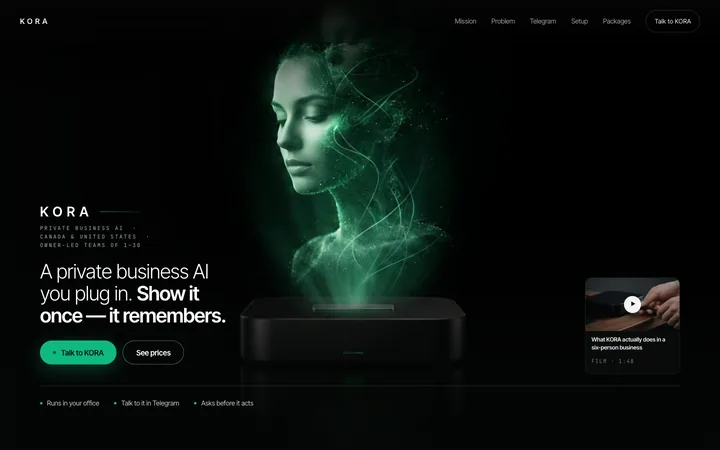
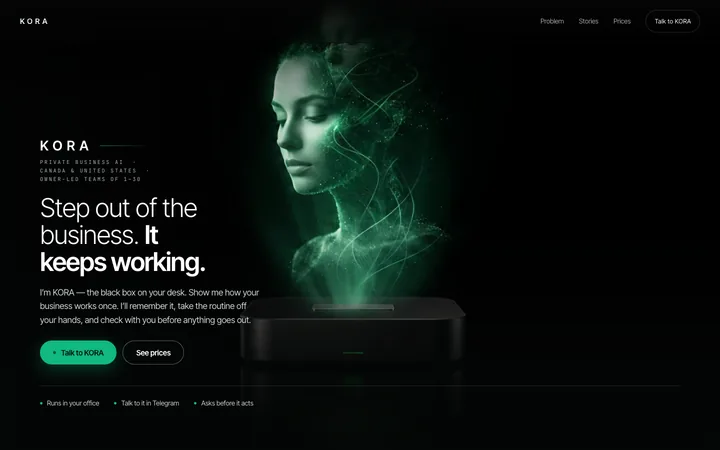
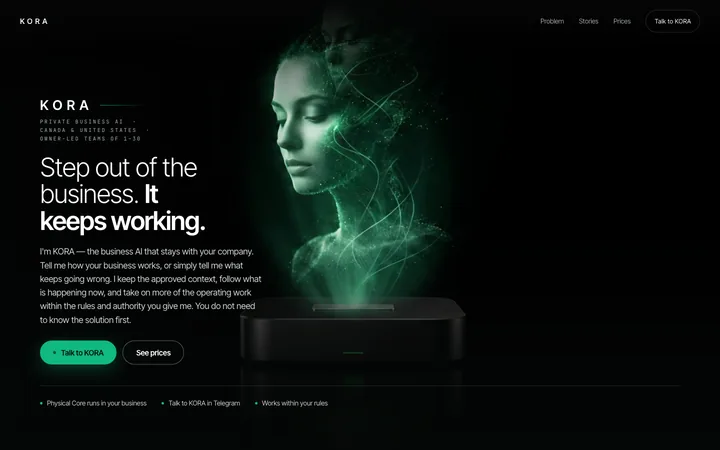
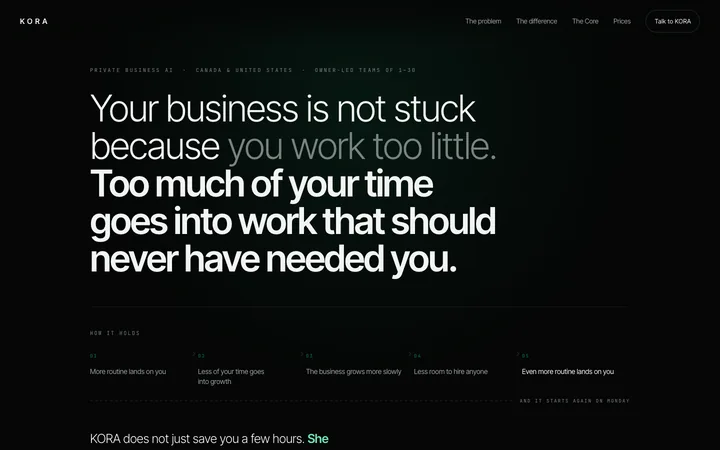
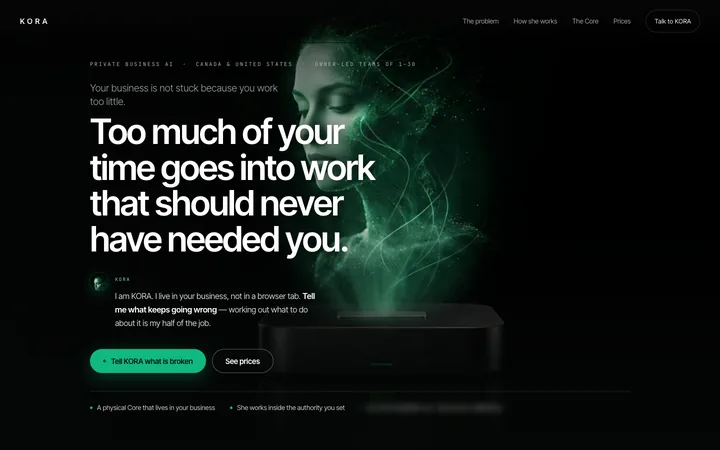
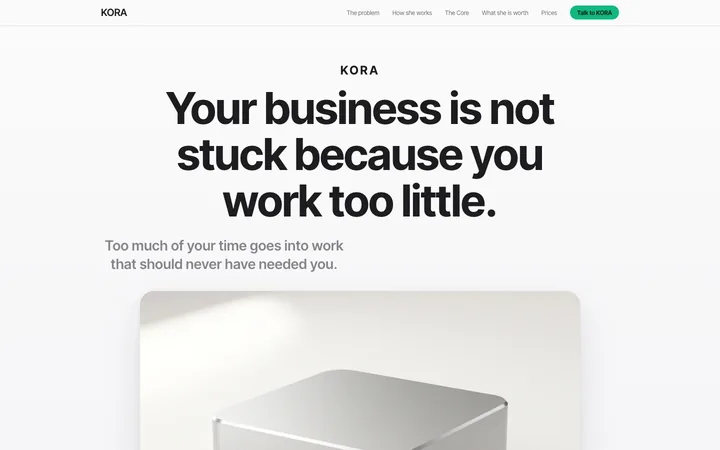
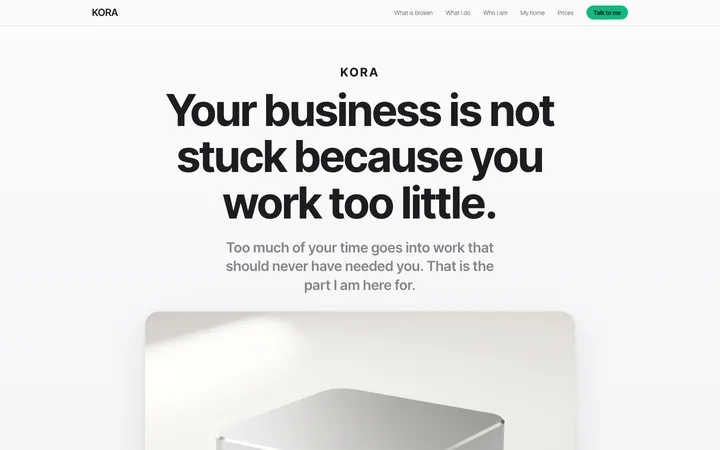
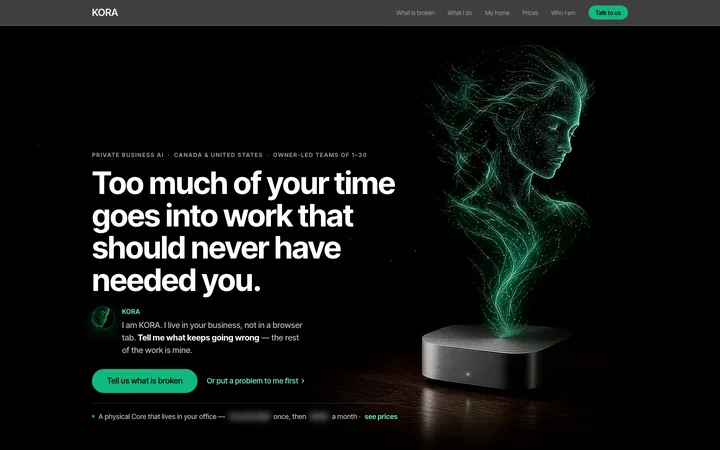
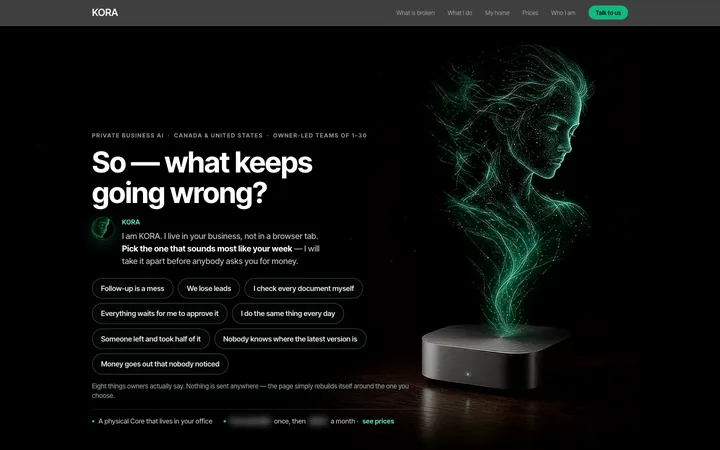
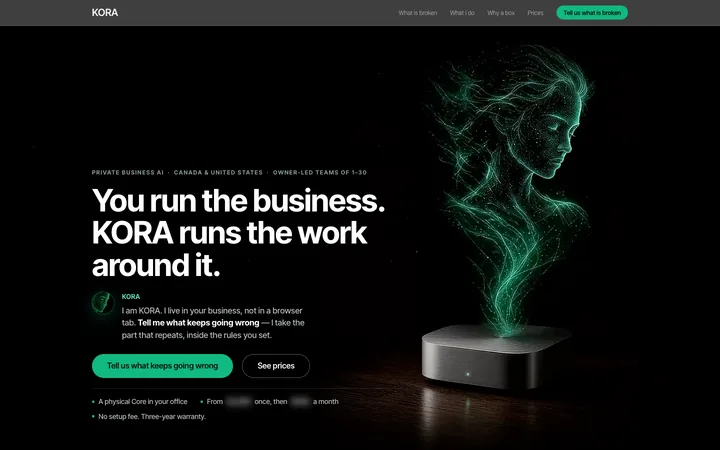
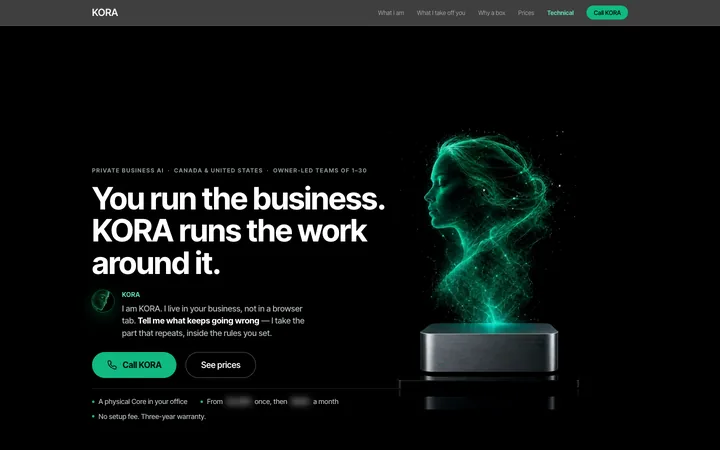
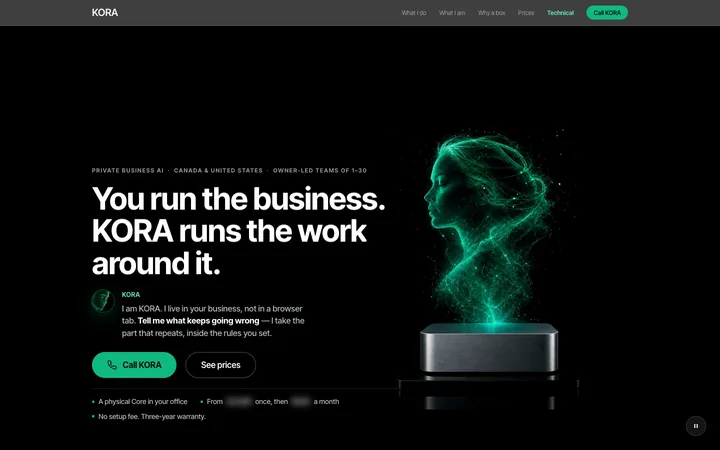
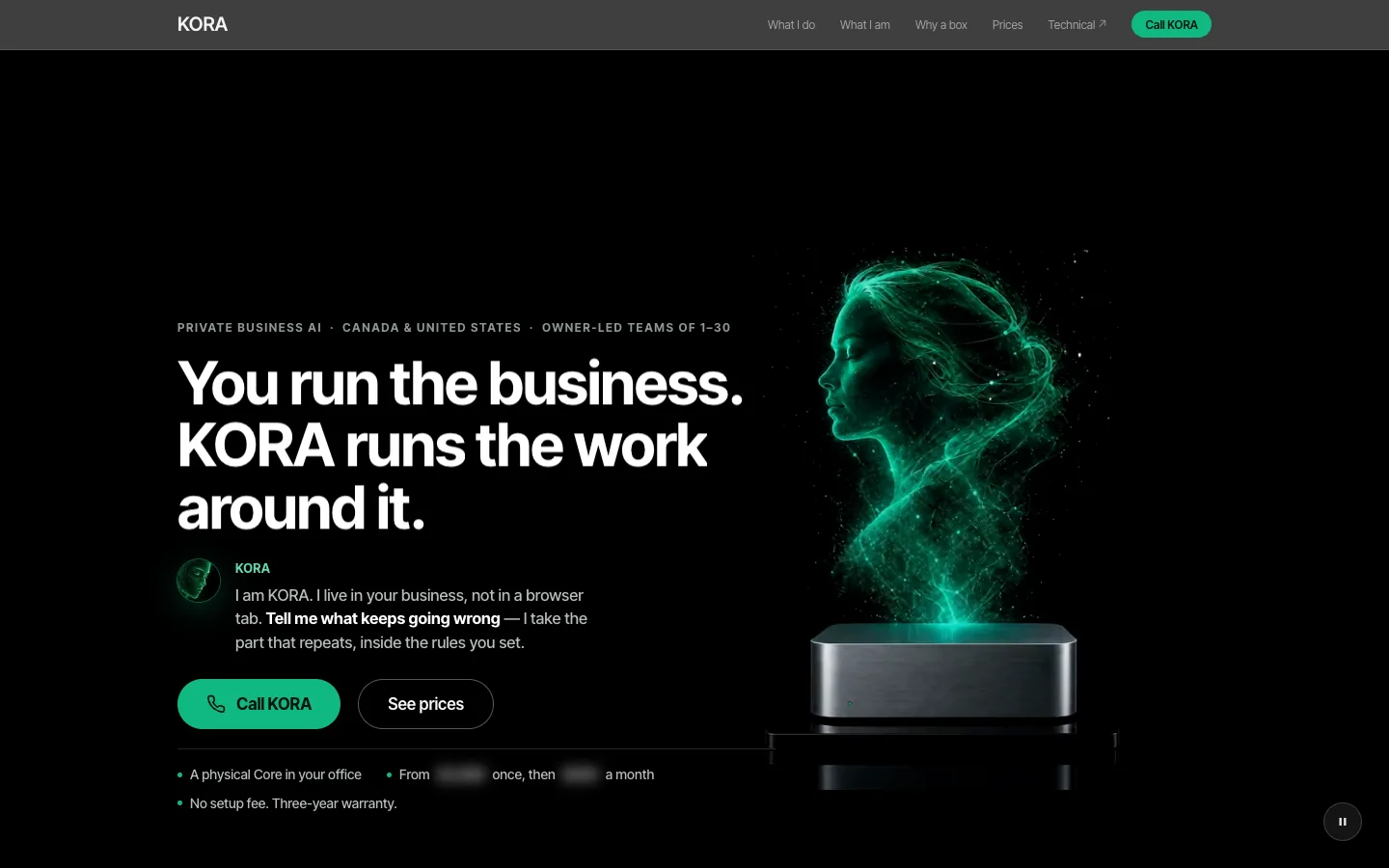
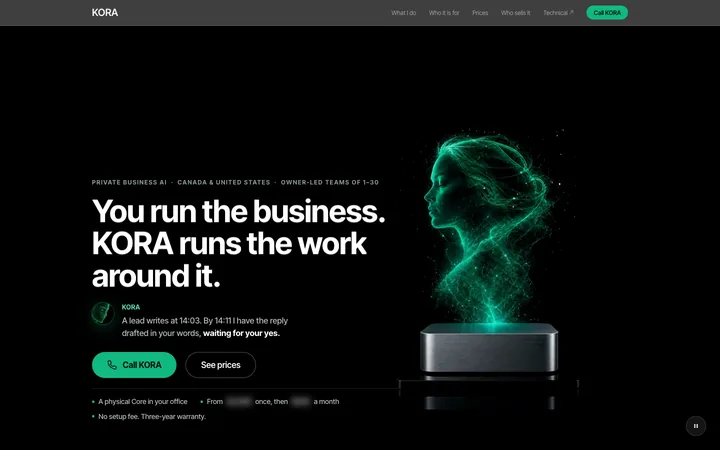
the final site — scroll through it
this is version thirteen, top to bottom. a hero with KORA above the Core: “you run the business. KORA runs the work around it.” below it, the window for the film. then the most important block — six scenes from an ordinary week, as a messenger: KORA writes, the owner approves. “not a chatbot. not a dashboard.” the machine and the four things it is built around. eight industries where the same work comes back every week. why a machine and not a subscription. a calculator for the owner's hours. the three Core variants and what isn't on the bill. the neighbours on the market. the origin. who sits at the other end. four questions owners ask first. and two ways in: call, or write once — 17 sections, 21,456 pixels.
the prices are on the partner's site; here they're blurred out. the site's code stays with him — what you see here is an image you can scroll.


twenty-four voices, five in the final, one
KORA was meant to speak in the film herself. the canon leaves little room: calm, collected, direct, a little synthetic — never breathy, never playful, never seductive. no real actress to clone. in three rounds i had 24 ai voices read the same lines and measured each one: base pitch in hertz, intonation range in semitones, tempo in words per second, noise share — plus an automatic transcription that flags every swallowed sound.
the grid sorted fast: too fast (four words a second), too theatrical (nineteen semitones of range), too young, breathy. five were left. then i listened — and chose Diane: low, 157 hertz, an even rhythm, a clear tone without breath, zero errors in the transcription. she doesn't read it out, she says it.
then the recording: 15 lines, 160 words. one take swallowed the word “approved” in one line — the transcription flagged it, the line was re-recorded. tempo raised by five percent, because the model itself has no tempo control. the three later films speak with the same voice on the next model.
the first cut had people. the last one has none.
cut one: a 60-second film with ai-generated scenes — a tradesman at the kitchen table, sticky notes on the laptop, the box in his hands. technically clean. the partner's verdict: “weak — she's typing the whole time.” ✗ a film about an ai that looks like every ai ad tells nothing.
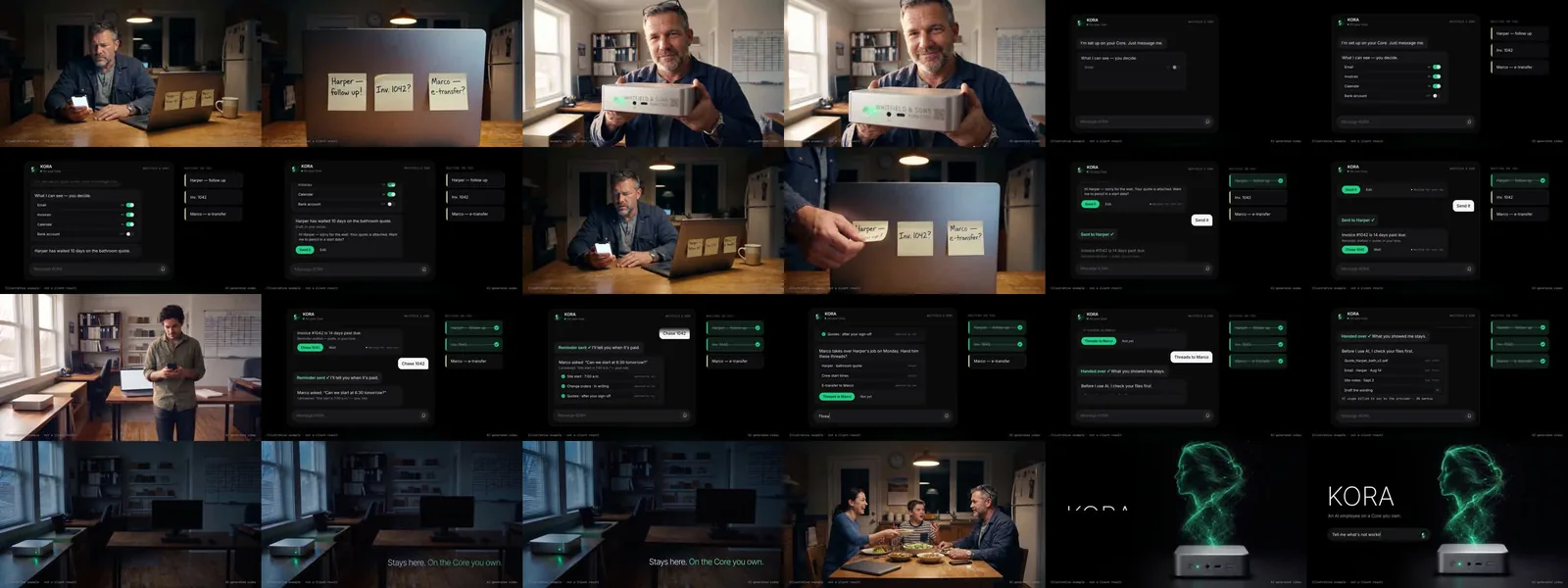
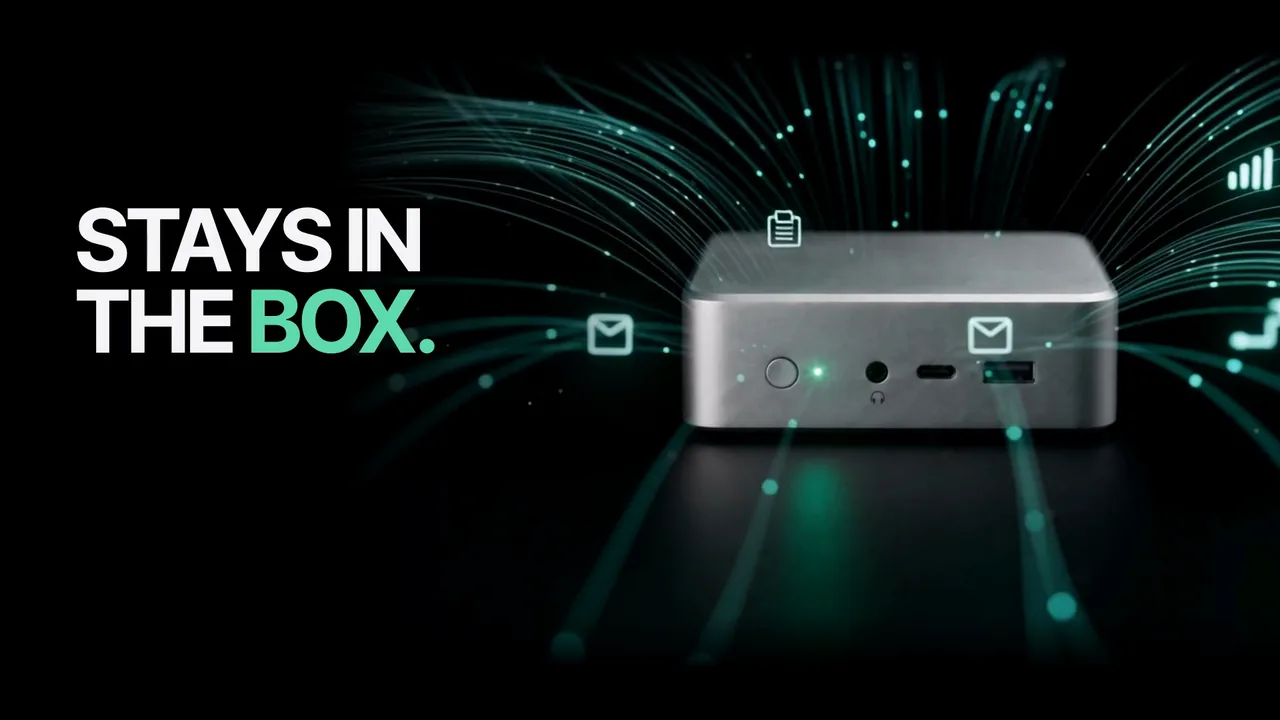
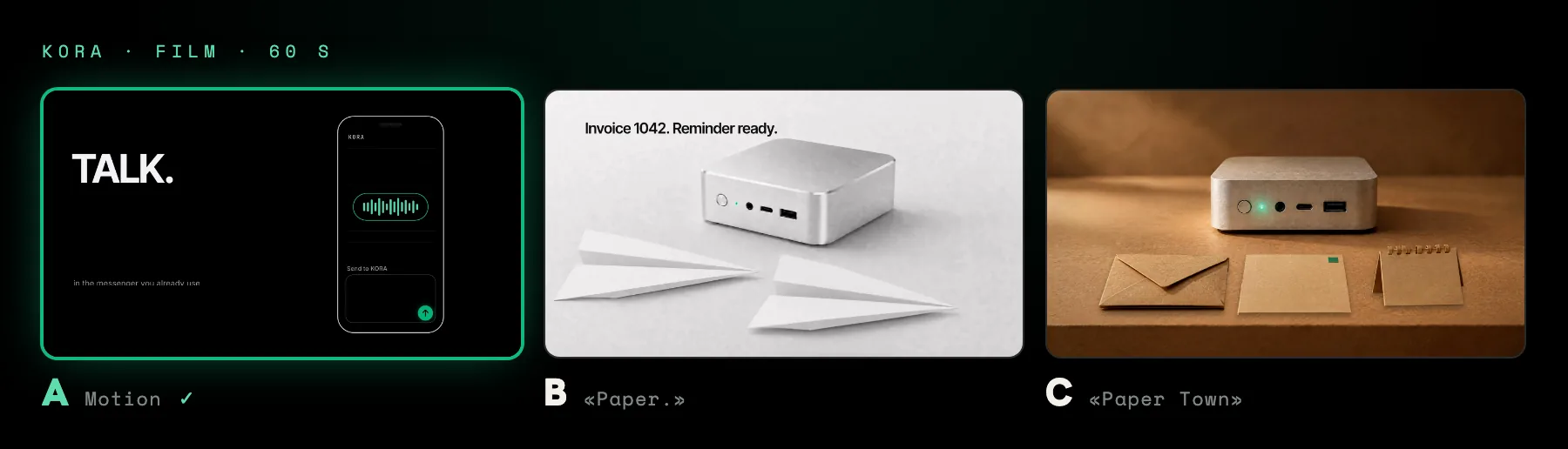
so everything out and start again — as a pure motion film in code: the Core as a 3D object, the face made of particles, 20 shots on 30 bars, the music drop exactly at second 16. three concepts in two days: A motion, B a studio world made of paper, C a city of kraft paper. then the test with real viewers — the partner's clients: the first one wins, but KORA herself is missing. cut twelve: the base of A, KORA at the start and at the end. ✓ 61 seconds, final.
site handed over, film final, strategy set
the website went as a package to the partner's domain, the film is final, the voice chosen, and the strategy for year one is set. what counts: none of this is a plan for later. it's where things stand today.
handed over — site v13, film A cut 12, voice Diane, strategy for year 1 ready. next: the launch stages.
fourteen versions aren't a detour. each one answered a question the client would otherwise have asked us.