how “when is the next service?” became a website that answers it by itself, every day
when, at what time, which feast?
the ukrainian orthodox community in freiburg has been worshipping since 2023 in a borrowed chapel in günterstal. there was no website — a youtube channel with five videos and a phone number. anyone new to the city, often just arrived, often in a hard hour, found nothing.
on top of that, the community lives by the julian calendar. every feast has two dates, every sunday a tone, every week a fasting rule. and that is exactly the question asked most often: when, at what time, which feast. the website had to answer it — not once, but every day, without anyone maintaining it.
✗ before: no website — a youtube channel, a phone number
✗ two calendars: old style, new style, tone, fasting — all kept in people’s heads
✗ the schedule: ended on 30.09.2026, and nobody maintains a website on the side
✓ the fix: a calendar that computes itself, syncs itself and never goes stale
the first draft looked like AI — so it went
on 22.08. a finished draft was ready: clean, modern, generic. small spaced-out capitals under every block, card grids with arrows, a “dashboard” hero with a giant 9:30. my verdict: looks like AI, pushes people away. so i looked at living parish sites in germany. they hold on to three things: a real photo of the church, the seal ІС ХС НІ КА, a plain list with dates. nothing more.
the next service became a sentence — “on sunday, 4 october, at 9:30” — instead of a tile with a number. the sacraments a list instead of a wall of cards. and the captions italic and quiet instead of in capitals.
✗ ~40 small spaced-out capital labels → ✓ 0 — italic, quiet captions
✗ a hero like a dashboard, 9:30 in giant type → ✓ the next service as a sentence
✗ two card grids with arrows (“i would like …”, sacraments) → ✓ one list
✗ frames and 1-px grids around everything → ✓ three colours: paper, ink, wine
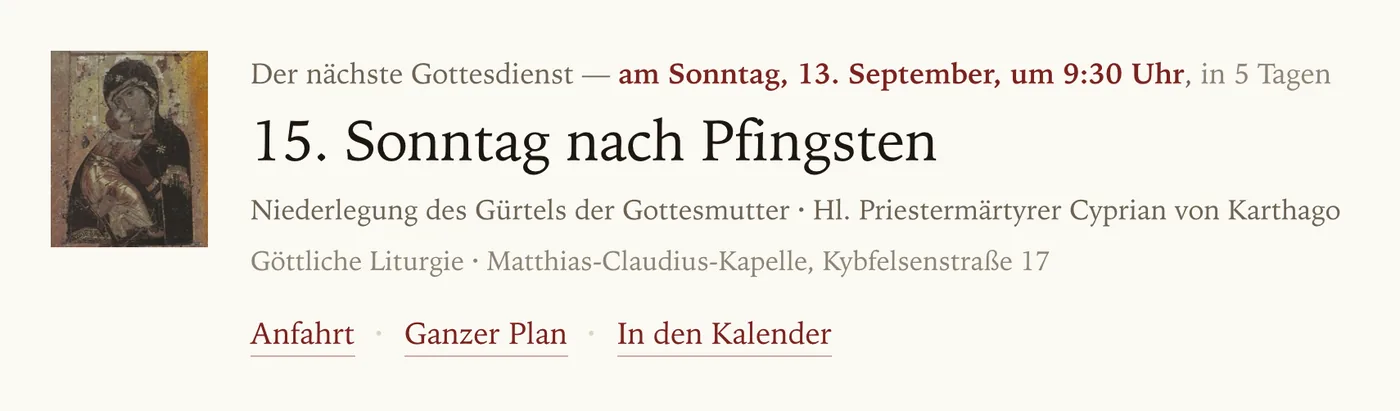
a calendar that computes itself in the browser
under the first picture sits a wine-red strip: the date, the date in the old style, the tone of the week, fast day or not, days until the next great feast — and on the right the next service as a sentence. nobody maintains this strip. it computes. once in python for the build, once in javascript for the browser, and both have to say exactly the same thing, byte for byte.
that’s why there is a test: 2,191 days, from 1 january 2025 to 31 december 2030, six easters, 6,573 comparisons. result on 02.10.2026: zero mismatches. the page doesn’t go stale between two builds — open it on a tuesday, and it shows tuesday.

flip through months, the feast on hover, every service into your own calendar
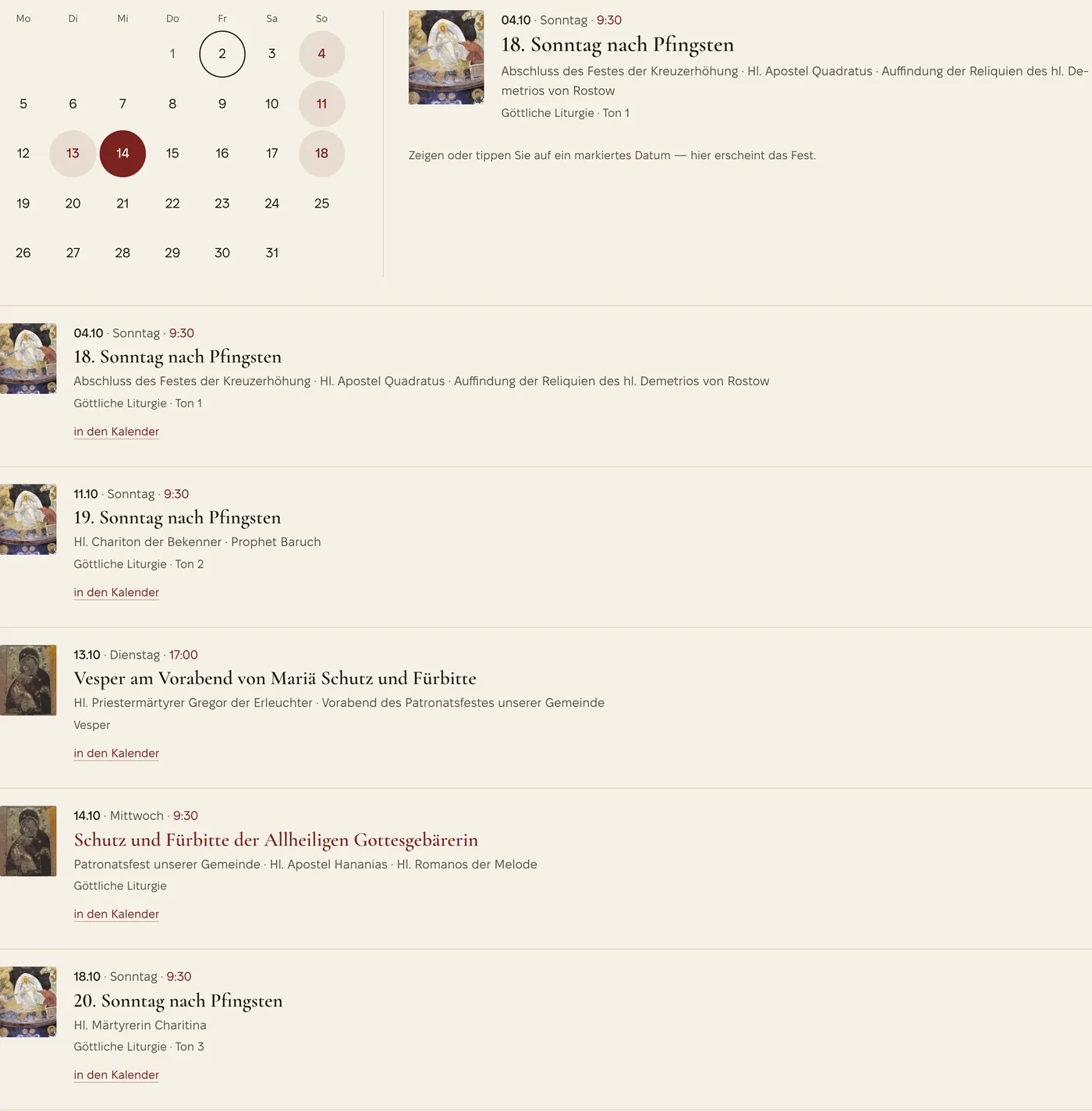
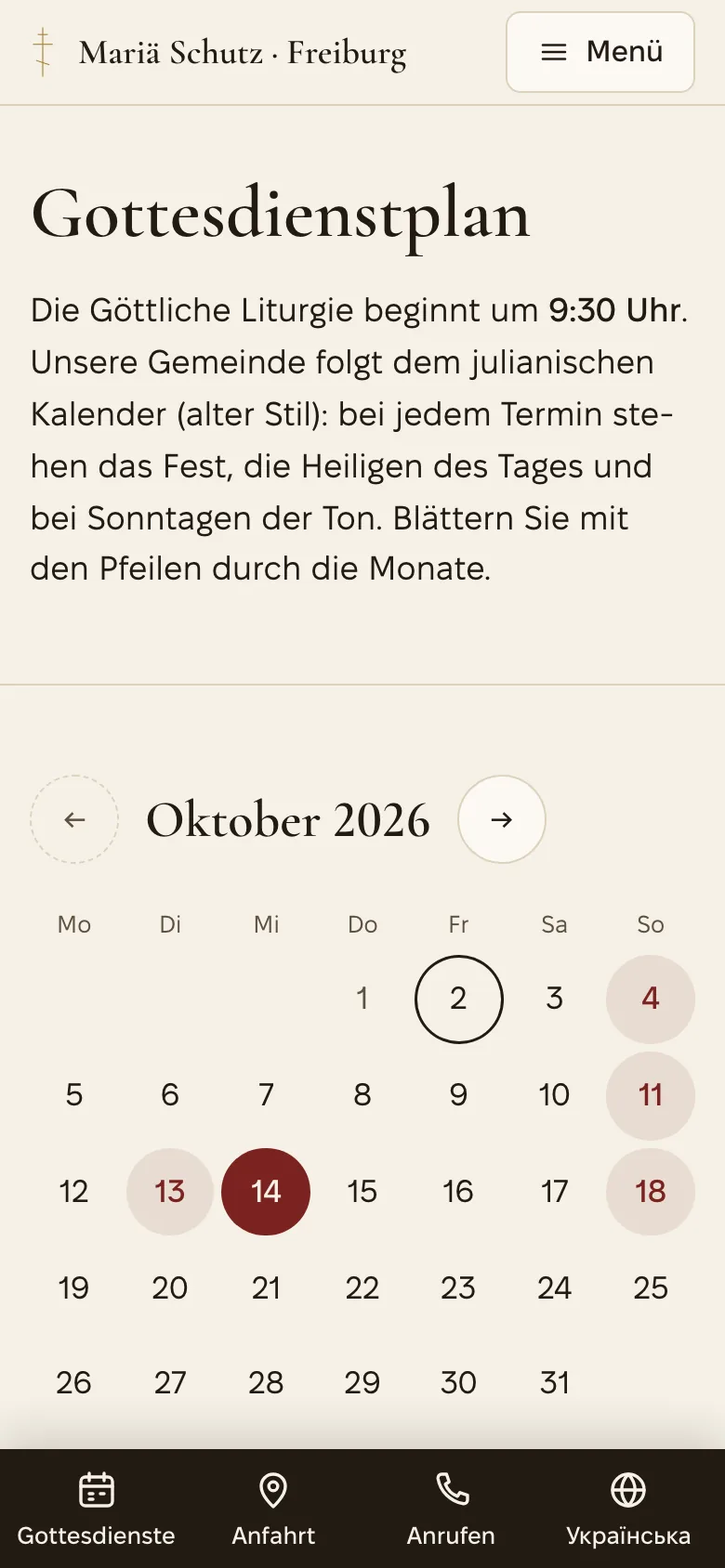
its own page, “gottesdienstplan”: month by month, marked days, and on hover or tap the feast appears — with icon, saints of the day and tone. below it the list, and on every service “in den kalender”: one .ics file per service, plus the whole schedule as a subscription for google, apple or outlook — 33 services in one file.
on the phone the same logic, just with the thumb: tap instead of hover, month navigation 44 px big, no horizontal scroll from 320 to 390 px. the browser itself recognises past services — again without a new build.
three times a day the website asks the chapel’s calendar
the chapel doesn’t belong to the community. it is shared, and the bookings sit in a common calendar — our services in it as “ukrainischer gottesdienst”. since 30.09.2026 a script reads this calendar at 7, 13 and 19 o’clock: new services come in, cancelled ones go out, sundays and feasts get their names from the parish’s own church calendar, the site is built and published — only if something changed.
the rules matter more than the code: hand-kept entries are never overwritten. if the calendar doesn’t answer, everything stays as it is. saints of the day are never invented — where there is no source, nothing is written.
- the chapel’s calendar
- sync · 7 · 13 · 19 h
- parish schedule + church calendar
- online — only if something changed
no stock photo, no AI image — not even the chapel stayed borrowed
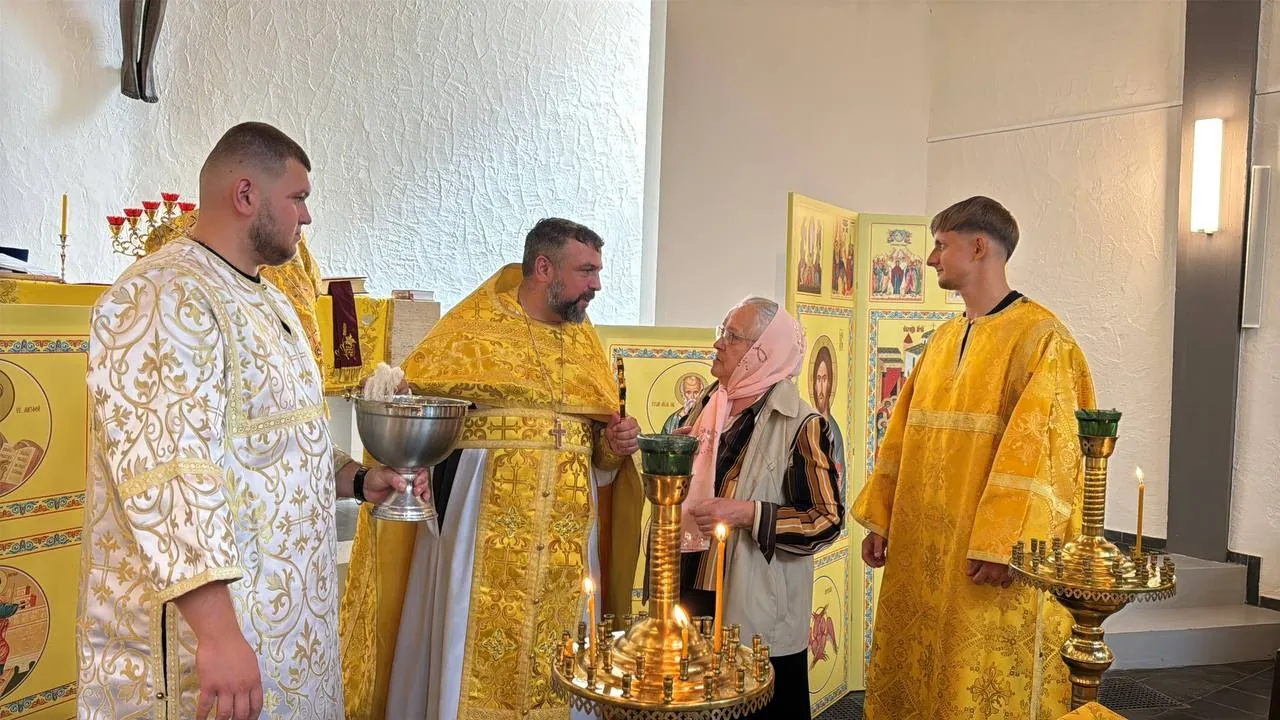
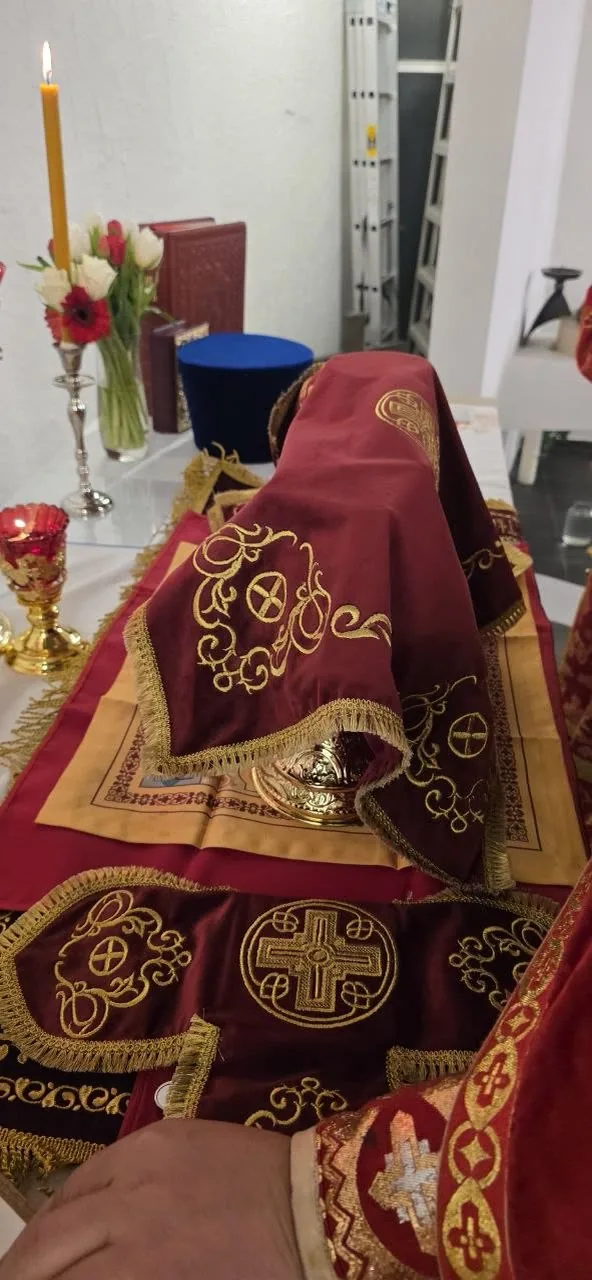
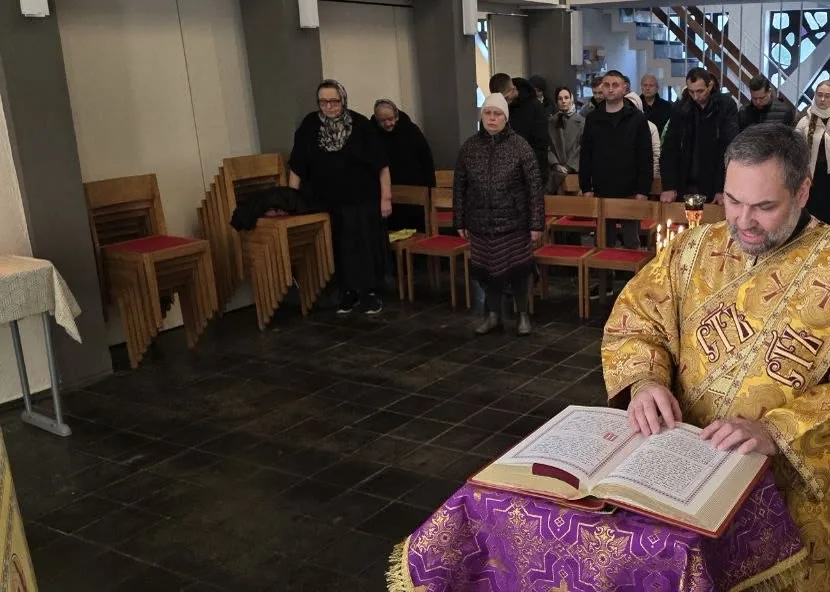
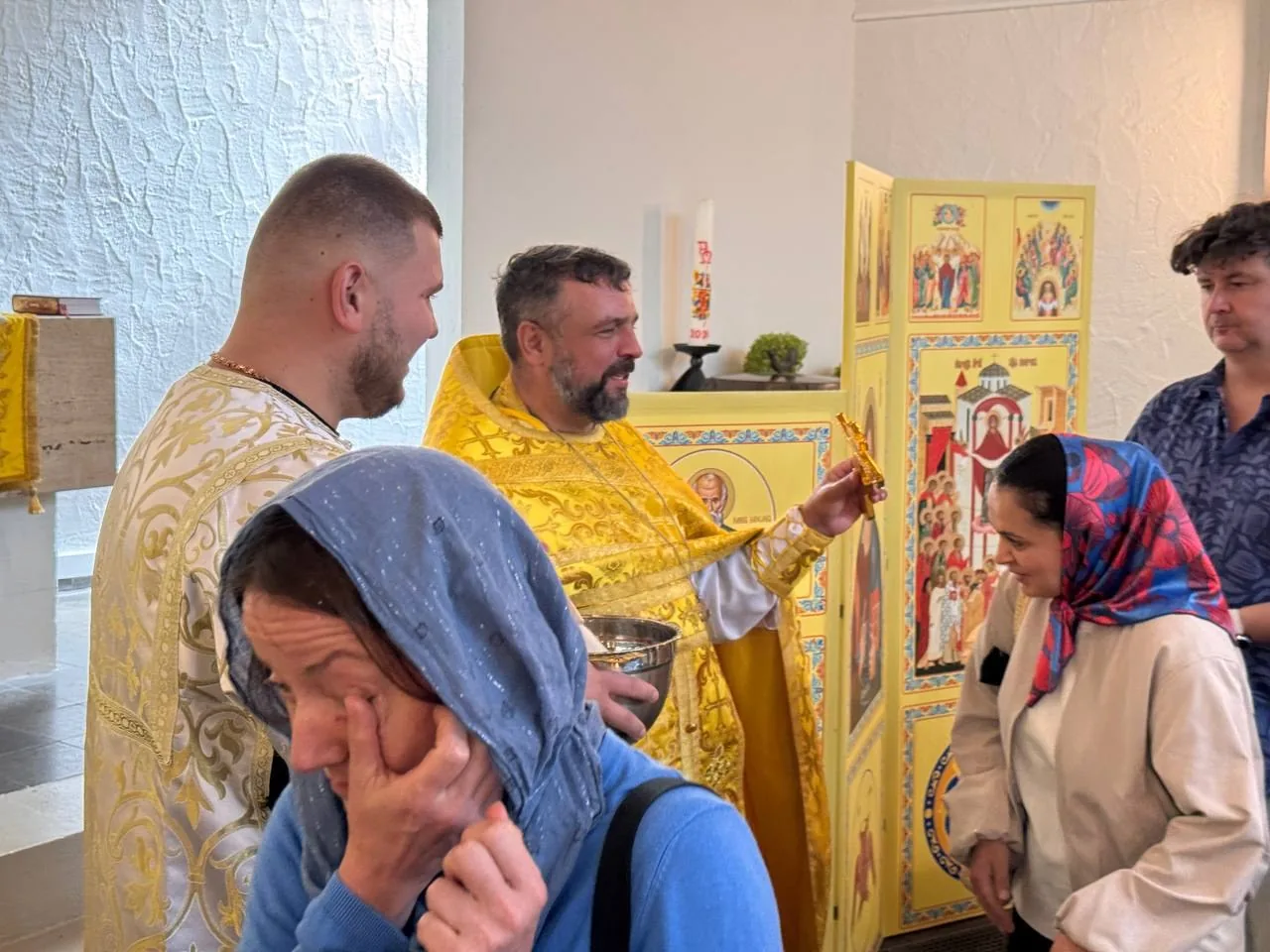
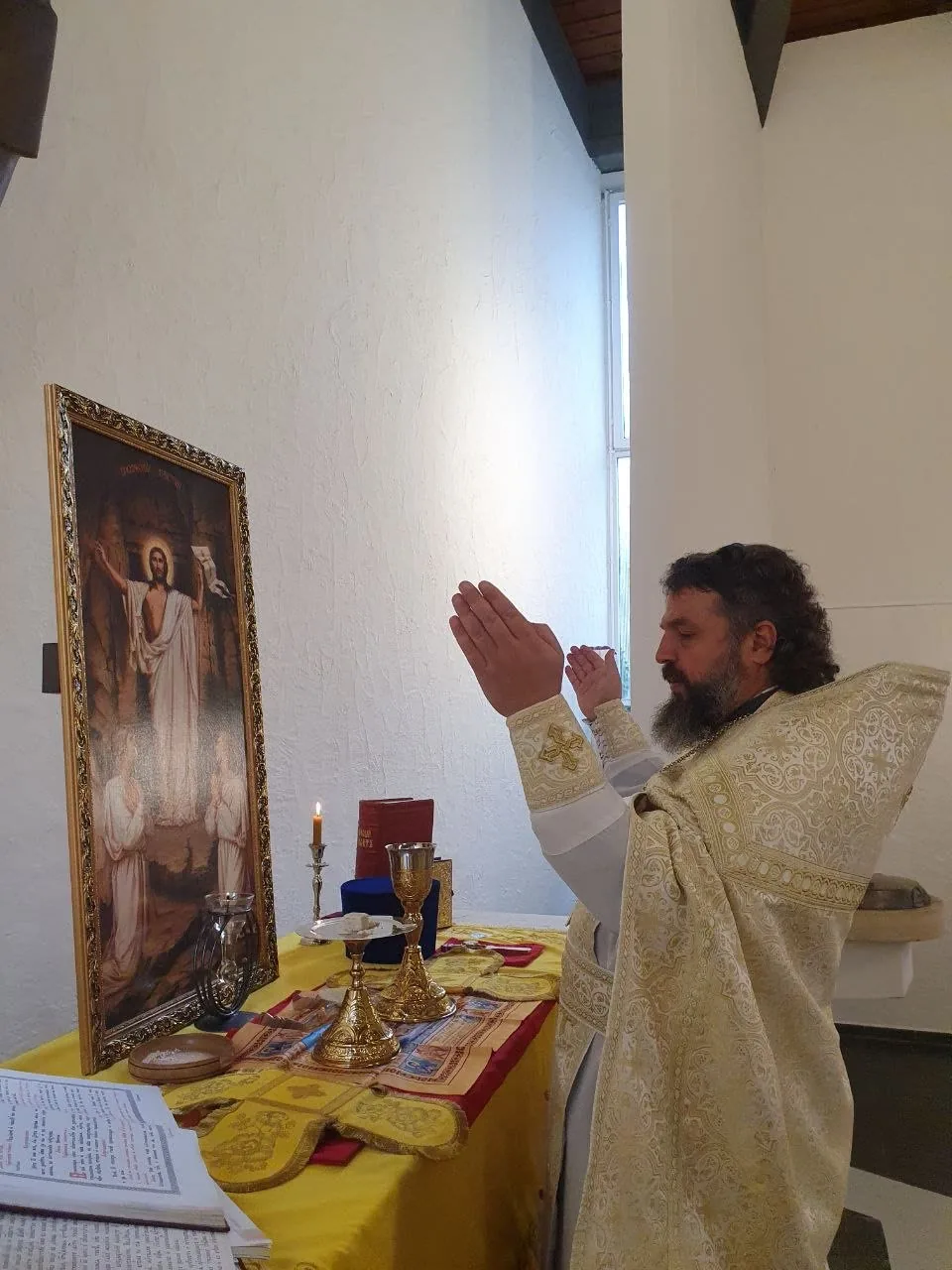
at the start there was a single borrowed picture: the chapel from wikimedia, with the photographer credited. then came the community’s own pictures — first 21 files, later 28. i took what tells a story and exposes no one: 16 pictures on the home page, the rest under “über uns”, plus a film of the christmas feast, 3:11, that only loads on click. gps data from the phone photos is gone before it ever reaches the server.
every picture has a “faces” field in the code. one switch — and all pictures with recognisable people disappear without breaking the grid. there are deliberately no captions, only alt texts: a wrong name under a holy picture is worse than none.
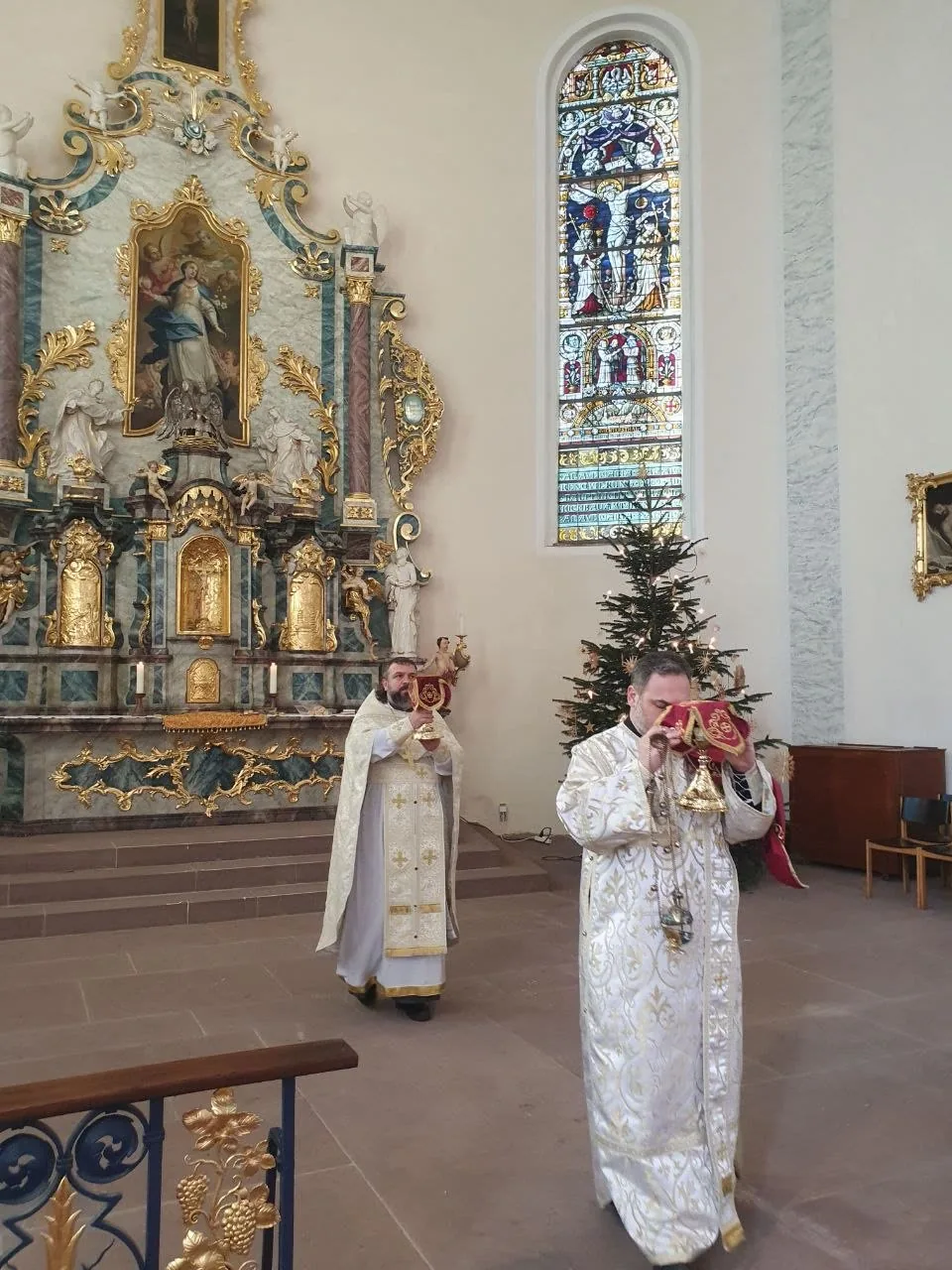
the pictures that stayed show what a parish is made of: the holy water, the reading, the faces after the liturgy — and the altar before anyone arrives.
premium for ordinary people: type, contrast, a bar for the thumb
the audience: ukrainians between 30 and 70, on the phone, often on this site for the first time. premium here doesn’t mean effects, it means calm. cormorant garamond and fixel text — both with ukrainian cyrillic, both local, around 160 kb together, no connection to google fonts. three colours: paper, ink, wine. body text 18 px instead of 16. the quiet text from 3.3:1 to 6.8:1 contrast, so older eyes can read it.
on the phone a bottom bar with exactly four things: services, directions, call, language. and nothing moves that doesn’t help — with “reduced motion” nothing moves at all.
Abschluss des Festes der Kreuzerhöhung · Hl. Apostel Quadratus
Abschluss des Festes der Kreuzerhöhung · Hl. Apostel Quadratus
imprint, privacy, faces — nothing you have to explain later
a parish isn’t a company, and still § 5 ddg applies. imprint and privacy policy are written, twelve sections, among them one on photos from parish life (§ 22/23 kunsturhg) and how to have yourself removed from a picture. youtube videos are facades: the preview lives with us, the iframe only comes on click — before that, not a single request goes to google. the map is a static image from our own server, not an iframe. the wikimedia photo keeps its licence credit for as long as it is on the site.
and for the offer to have a baptism or wedding filmed there is deliberately no price: the parish is not commercially active, and it has to stay that way.
✗ osm map as an iframe — a request on opening → ✓ static map, own server, 0 requests
✗ youtube iframe — a request to google before every click → ✓ facade: preview with us, iframe only on click
✗ photos without a rule → ✓ “faces” register in the code, one switch, § 22 kunsturhg in the privacy policy
✗ prices on the parish site → ✓ no price, not the word “leistung” — § 60a ao
live since 21 september 2026 — the schedule has been running by itself ever since
domain, dns, hosting, certificate in one morning. eleven pages, ukrainian and german, each with canonical and hreflang, sitemap, llms.txt, json-ld for the church and every service as an event. the video plays on an iphone too, because the server answers range requests. 16 requests on load — all to the parish’s own domain. and since 30.09. the schedule keeps itself.
a website for a parish doesn’t have to impress. it has to give the right answer every day — when, at what time, which feast — without anyone maintaining it.