how a format experiment became 14 million views
just an experiment
before there was a plan, there was curiosity. the team was already making ai videos for other work — and on the side, we kept testing formats and themes nobody had asked for, just to see what an audience would actually respond to.
✗ no brief, no niche: just a small channel and a stack of experimental clips, including a medical-theme line.
✓ what we did: posted every experiment on our own channel — and let the audience decide which one was right.
3.7 million views
one of those experiments hit 3.7 million views. the next ones pulled 100–500k each. plain proof: some of this experimental content had huge organic demand — we'd found a format that fit.
then we paused — the team moved to other work. but we'd seen the signal, and we knew we'd come back for it.
a lab for what works
later we brought the channel back as our own lab — a place to test trends, build a pipeline, and scale what works. the insight: on the US market, short ai “what if…” videos were exploding — alternate-life scenarios. the format was proven in English, but nobody had adapted it for the Ukrainian audience (~50m Ukrainian speakers).
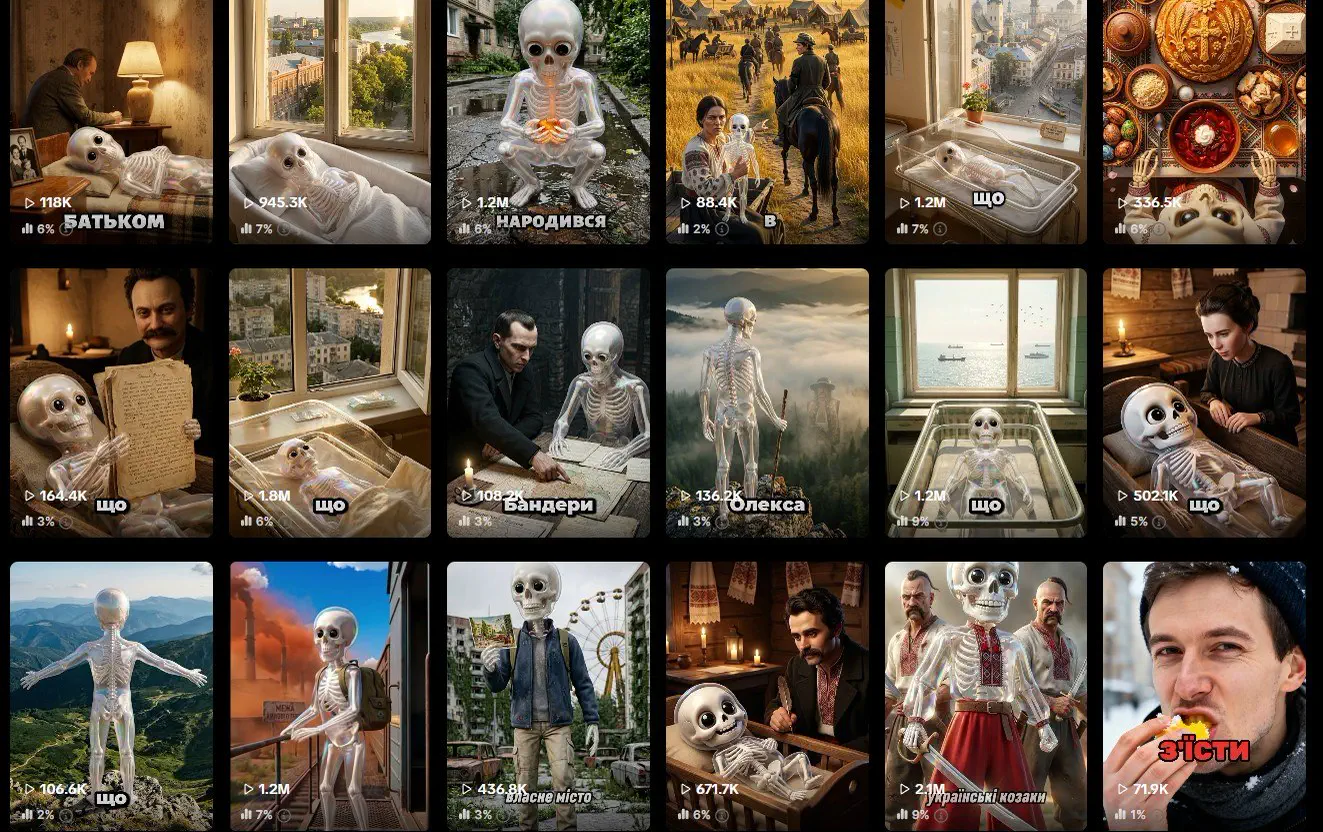
the question was simple: would proven mechanics work from the very first video if we just adapted them to a local identity? ✓ the first video of the new format — nearly 2 million views.
a proven format × a real identity
“what if” works because it makes you imagine yourself in the scenario — your brain wants the answer, so watch-through climbs. virality isn't luck: it's a proven format landing exactly on the audience's identity. so we mapped what hooks Ukrainians at that level — and two content lines were born.
109,000 shares in two weeks — the real proof: people didn't just watch, they recognized themselves and sent it to friends.
a face you recognize
the look went through a few iterations before it clicked.
✗ first tries (medical theme): a skeleton look, closer to cartoon, generated across several tools.
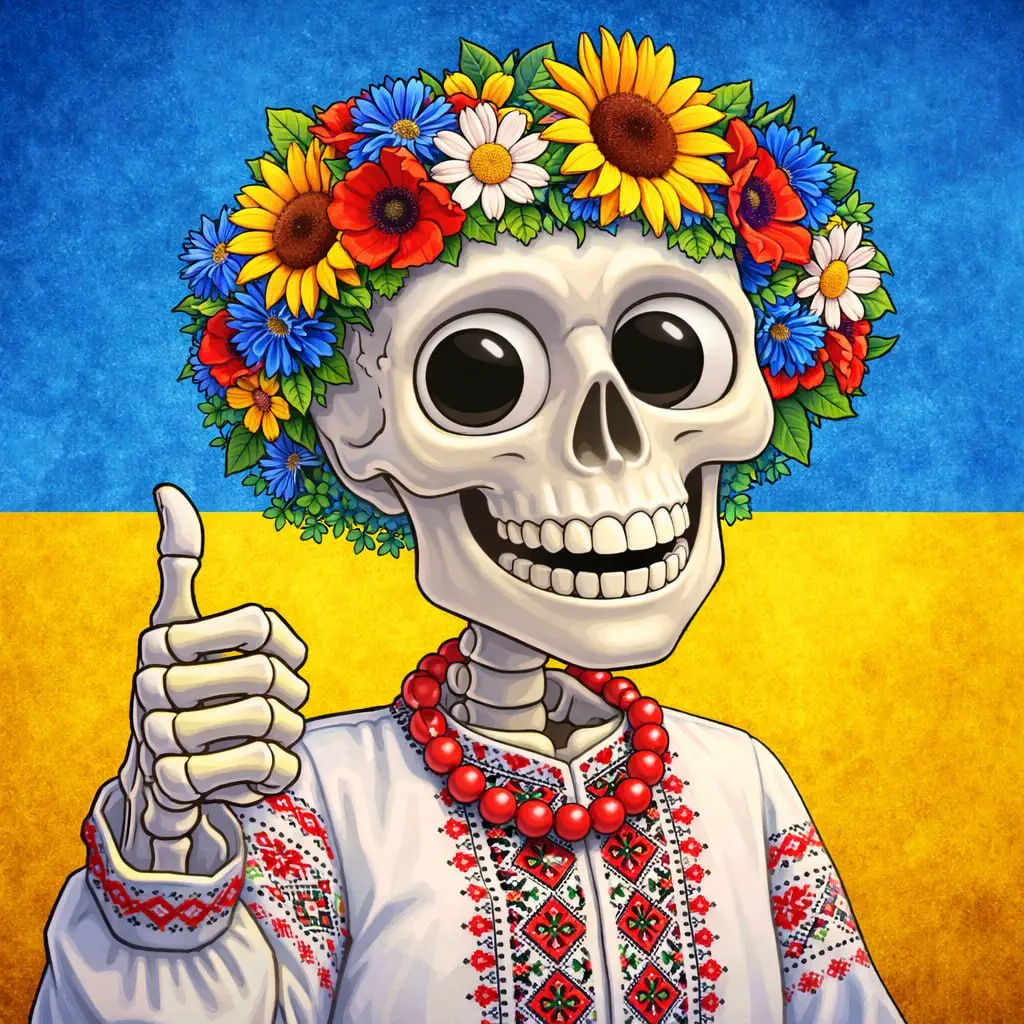
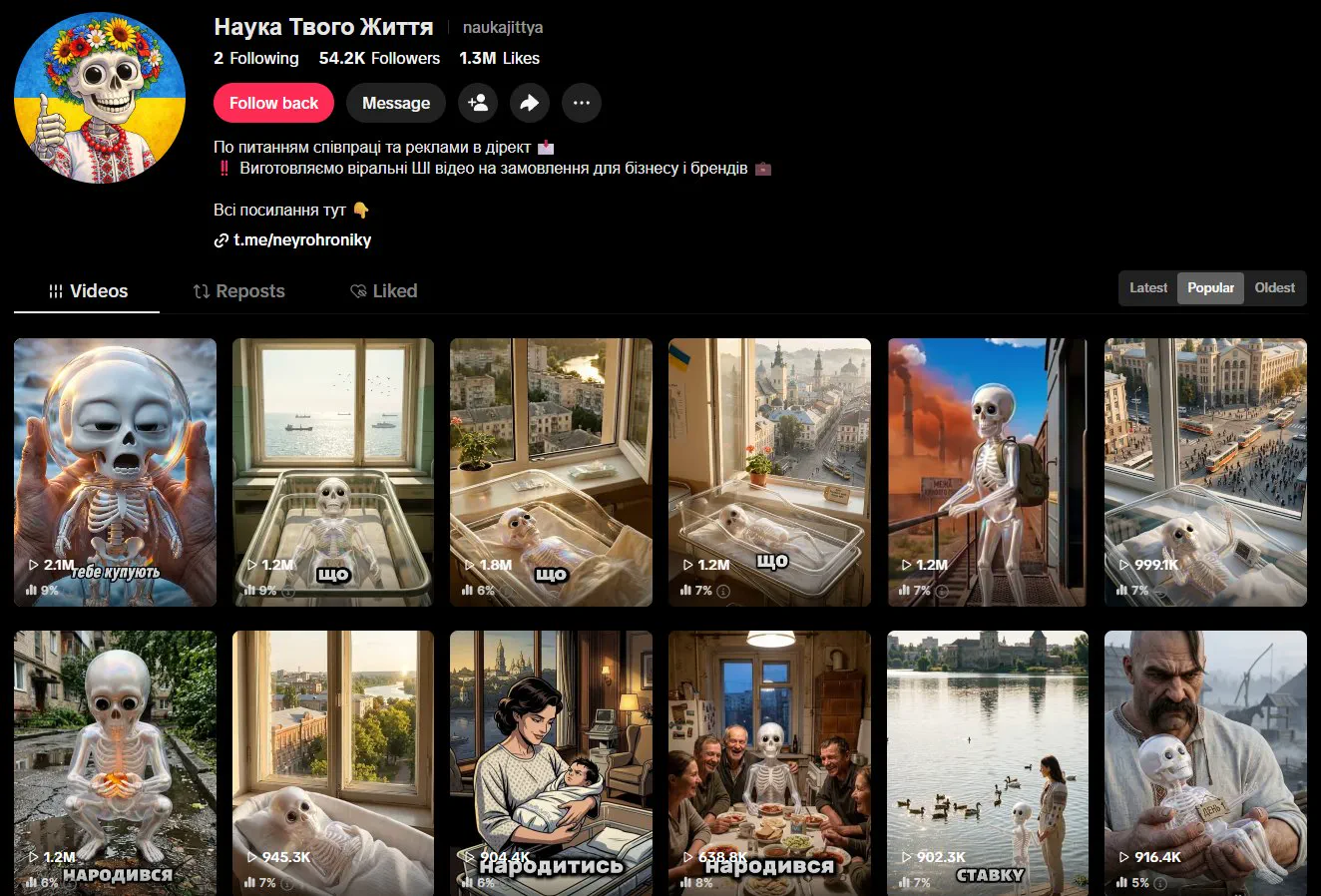
✓ the final: we moved toward realism — our own authored style, assembled from references and animated frame to frame. authentic, recognizable, and entirely in Ukrainian. the mascot — a skeleton in a vyshyvanka and a flower wreath — became the channel's face. once the style was that recognizable, city pages started reposting us.
a full pipeline, a small team, a tiny budget
we built the whole loop — script → ai generation → edit → publish — and deliberately held one video every two days. not for speed: to read the audience and correct course while it was still warm.
the budget is the part that makes it a real business, not a stunt:
10 videos · 2 weeks · €0 promo
with the format and pipeline locked, we ran a focused sprint — ten videos in two weeks, nothing spent on promotion. the numbers:
the two that flew: “what if Cossacks raised you” — 726k YouTube + 1.8m TikTok; “what if your mother was Lesya Ukrainka” — 357k YouTube.
one pipeline, four platforms
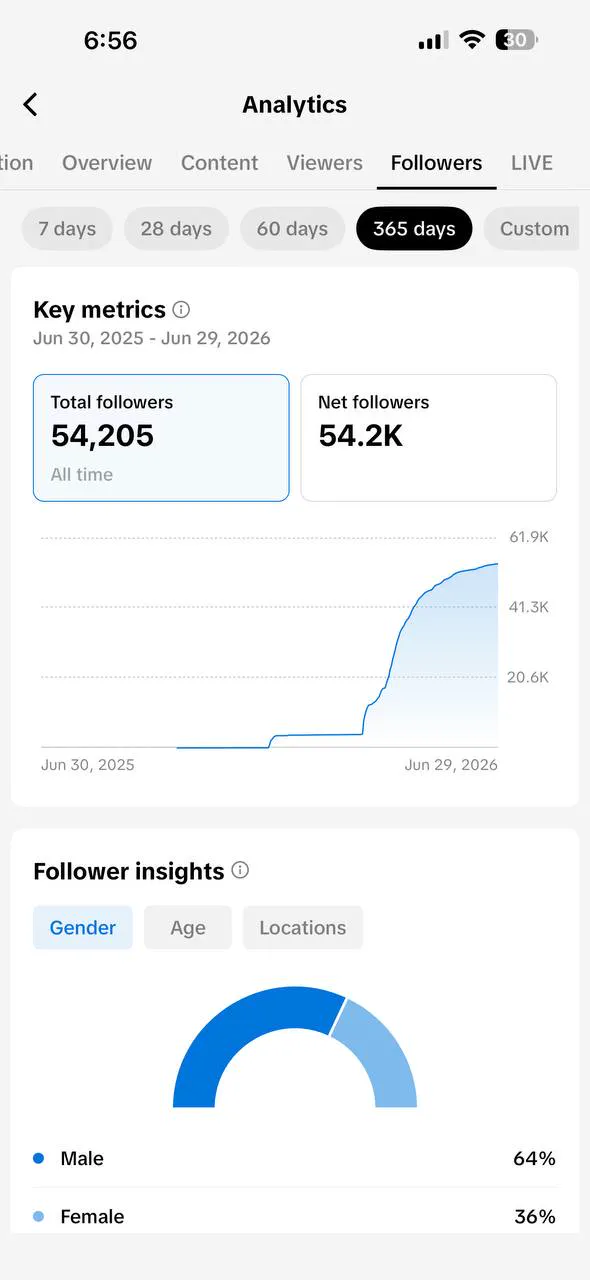
after the sprint the channel didn't stop — it grew on every platform at once. same pipeline, same style, no new mechanic.
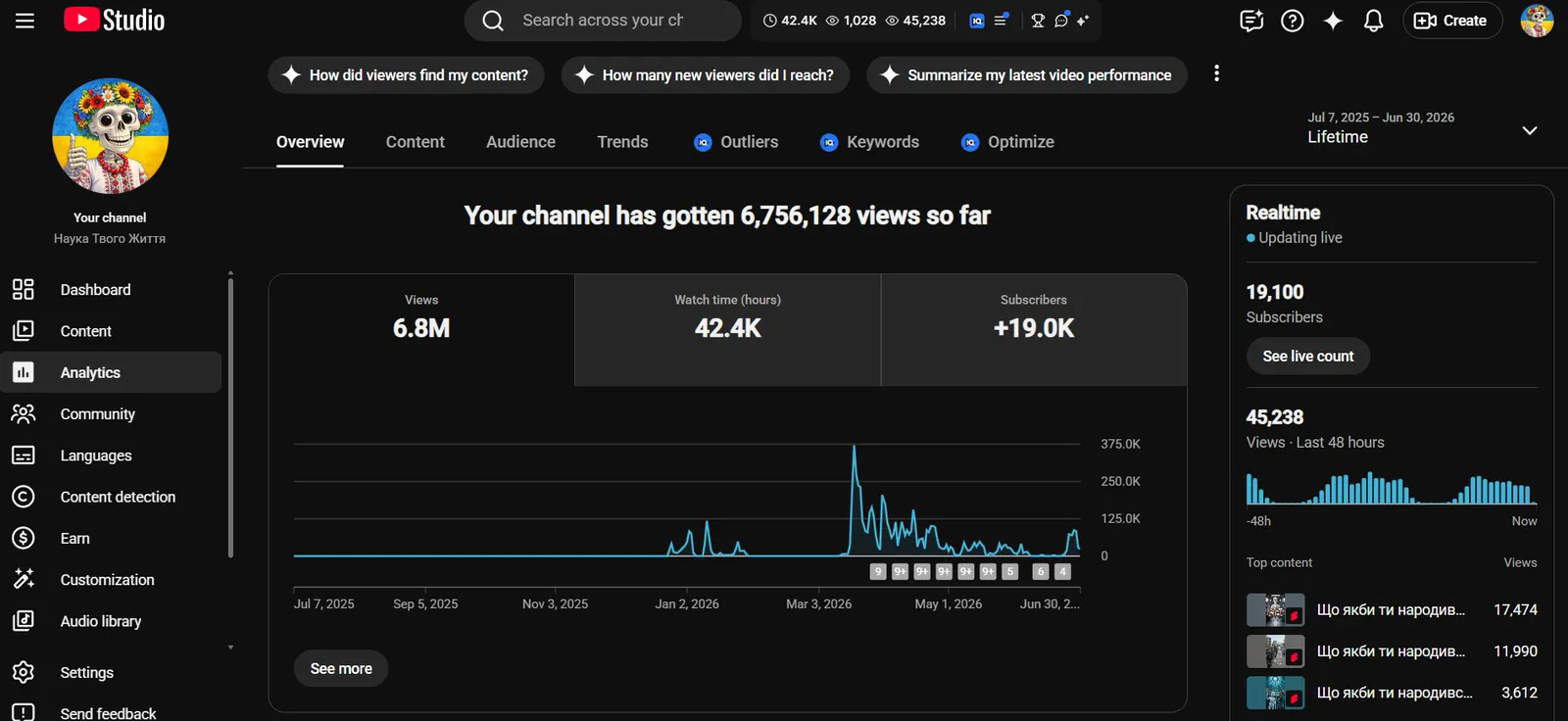
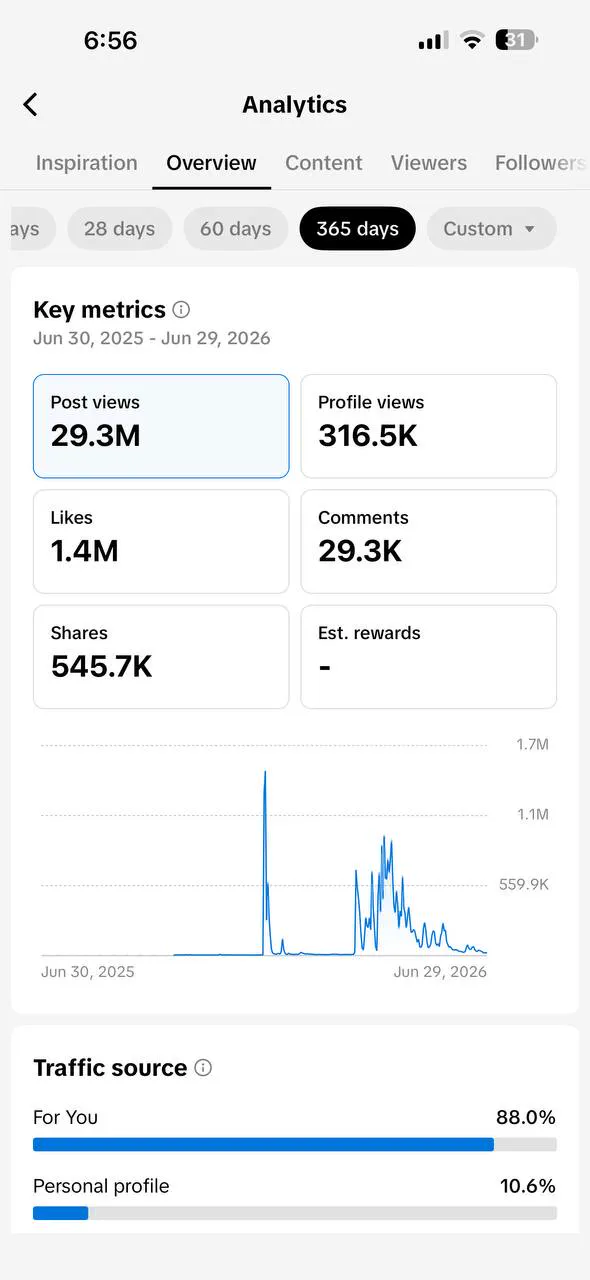
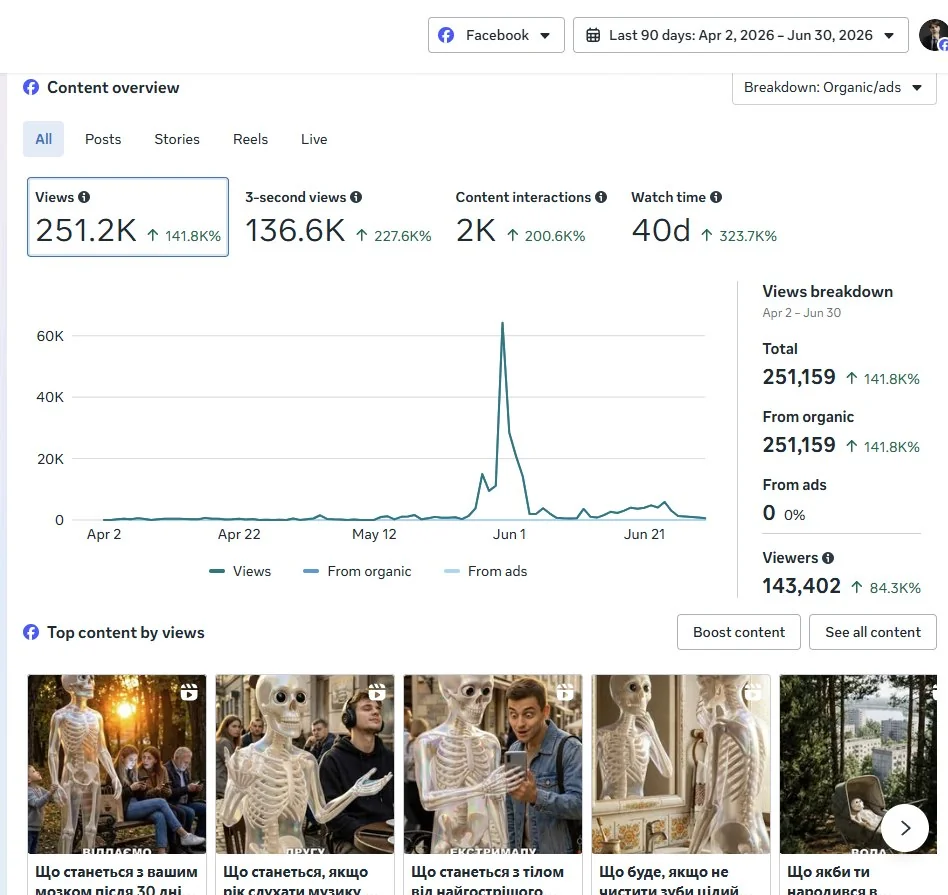
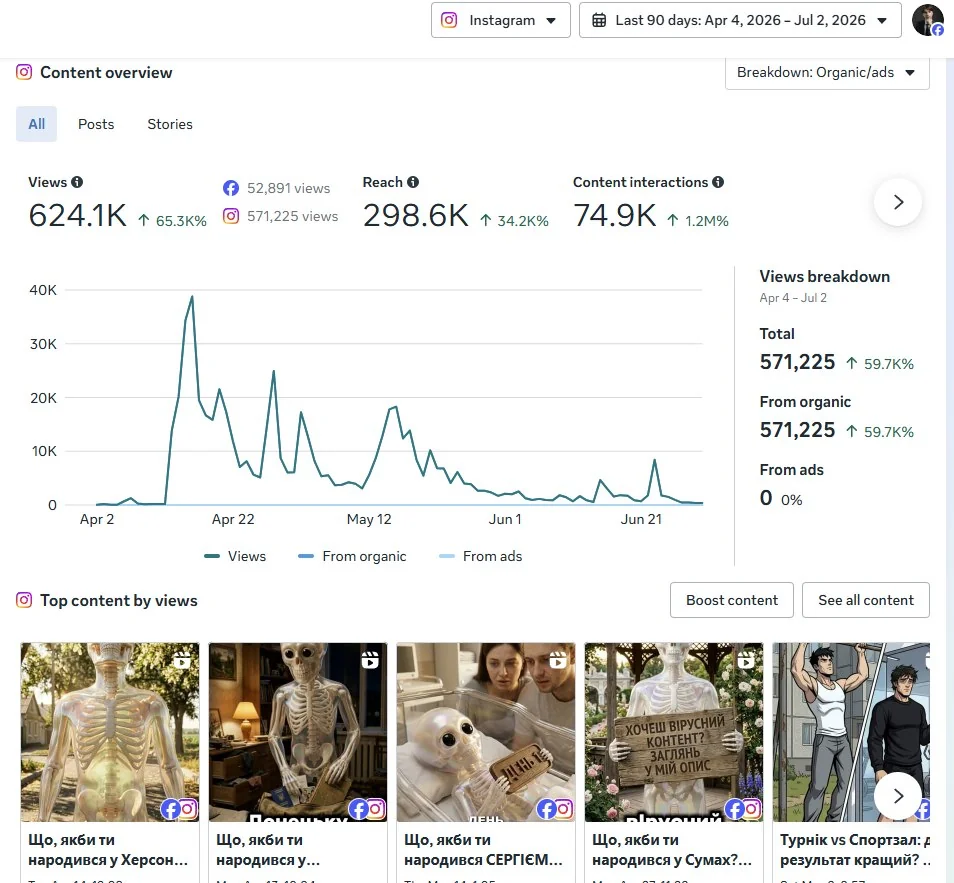
the punchline: Facebook and Instagram launched almost from zero and, in 90 days, grew thousands of percent — 100% organic, 0% from ads. the profile says the quiet part out loud: “we make viral ai videos for business & brands.”
virality is a system, not a lottery
the case proved the approach: don't wait for a trend to reach Ukraine — find it on another market, break down the mechanic, adapt it to the local audience, and launch first. ten videos gave us a formula we can scale: change the niche, keep the mechanic. next up — three parallel channels, different topics, same pipeline.
viral content isn't luck. it's a system: trend-scouting → adaptation → pipeline → scale. see it live:
YouTube channel ↗ TikTok channel ↗virality isn't a lottery ticket. it's a system — find the proven format, land it on a real identity, and ship faster than everyone still waiting for permission.